Future Possibilities
A local visibility command center
Your local visibility business has a name that can travel from one location to the whole network.
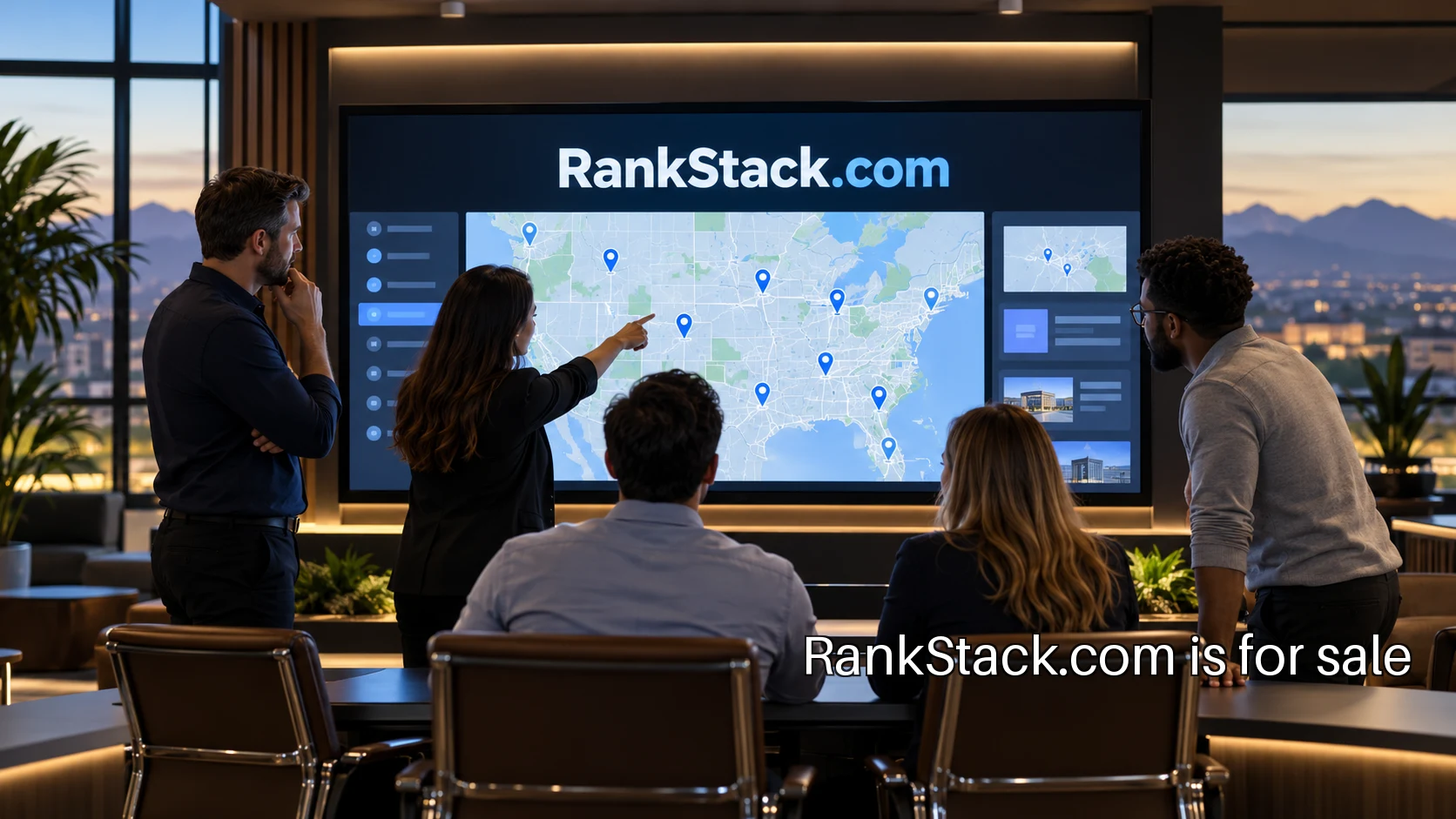
A multi-location operator needs to know which location needs attention, who can resolve the issue and when someone will check it again. A national average often leaves those questions unanswered. RankStack could be the identity for a local visibility service that turns location-level observations into a shared queue of work.
This illustrative business would serve operators with several business locations and a small central marketing team. Its first offer would be a recurring location review with assigned follow-ups. The service would connect the central team, local managers and specialist suppliers around a manageable set of issues instead of asking everyone to interpret the same large report.
Start with the location record
The basic record should identify the location, its public address, the responsible manager and the relevant profile or page. A service area business may need a different location model from a storefront. The founder would define that model with one pilot customer before creating a network-wide report. The quality of this register affects every later comparison and assignment.
Imagine a business with twelve repair locations. Two share a similar name, one recently moved and another has a temporary change in opening hours. A central spreadsheet may treat all twelve as interchangeable rows. A useful working record gives each one its own history so that a reviewer can connect a reporting change to the events at that location.
The initial review could ask the manager to confirm operational facts and identify pending changes. That creates a practical handoff between marketing and operations. The local manager knows whether an entrance has moved or a phone line is being replaced; the central team knows which public information needs updating and who has access to change it.
Choose measures with a clear meaning
Google's Business Profile performance documentation explains that the available measures depend on the business. The product should show which measures apply to each location and preserve missing or unavailable values as their own state. A blank field deserves a follow-up question before it becomes a performance judgment.
The same documentation distinguishes actions such as a website click, a request for directions and a click on the call button. A service can use those distinctions to help managers ask better questions. A location with a change in call-button activity might need a check of its contact information and operational context. The next step belongs with the manager who can investigate the experience at that location.
A founder could also connect the review to the location's website page. Search Console's Performance report provides another source for a selected page review. Keeping the profile observation and page observation separately labeled lets the service build a fuller location record without blending different measures into a single unexplained score.
Turn exceptions into assigned work
The queue could organize issues by the decision needed. An outdated opening hour needs confirmation. A location page with a broken link needs a repair. A reporting change with no obvious explanation needs investigation. Each item should include the evidence, the owner, the requested action and a date to return to it.
For the moved repair location, the queue might include confirming the new public information, checking the page visitors reach and following up with the manager after the update. The service would preserve each completed step. A regional operator could open the location record and see what changed without searching several email threads.
A useful issue also names what completion looks like. “Check profile” is too broad for a busy manager. “Confirm whether Saturday hours shown in this record match the current schedule” creates an answerable task. The founder can improve the service by studying which requests get resolved and which need clarification.
Make network reviews useful to different people
A regional manager may want an exception list for the locations they oversee. A central marketer may need the items requiring supplier work. An executive may want the decisions awaiting budget or policy approval. These views can share the same records while selecting different parts of the queue.
The first version could produce these views manually from a controlled location register. A founder would learn which filters people actually use before building many dashboards. The weekly review might begin with overdue decisions, move to newly discovered issues and finish with the checks scheduled for the next period. That gives the network a repeatable operating rhythm.
Permissions would need particular care. A location manager should see the work relevant to that location, and the central team should control who can change shared records. The service also needs a clear way to remove access when someone changes roles. Those are ordinary requirements of serving a business with many people and many locations.
Pilot one region before the network
The first pilot could start with an operator willing to review a small region. The founder could map the existing reporting routine, select a representative set of locations and run the exception queue for a month. Interviews after each review would reveal whether assignments reached the right person and whether the location records stayed current.
The initial commercial offer could define the number of reviewed locations, the review cadence and the kinds of follow-up included. The founder would then have a clear service to describe under RankStack. The name can travel from the first region to the larger network as the operating system becomes more useful.
The next step is to map one operator's location register and trace a recent issue from discovery to resolution. That journey will show which handoff the first offer should improve. To discuss acquiring RankStack.com, share the local visibility business you want to build and the customers it would serve.
RankStack.com acquisition
One name for your search business.
Explore an acquisition or a partnership built around RankStack.com.
Ask About Pricing